
并发控制:限流、背压、重试:让系统稳定推进,而不是瞬间冲垮下游
对应视频:EP11《并发控制:限流、背压、重试》
视频入口:B站 EP11。 对应合集:Python 并发实战:从基础模型到语音工程。
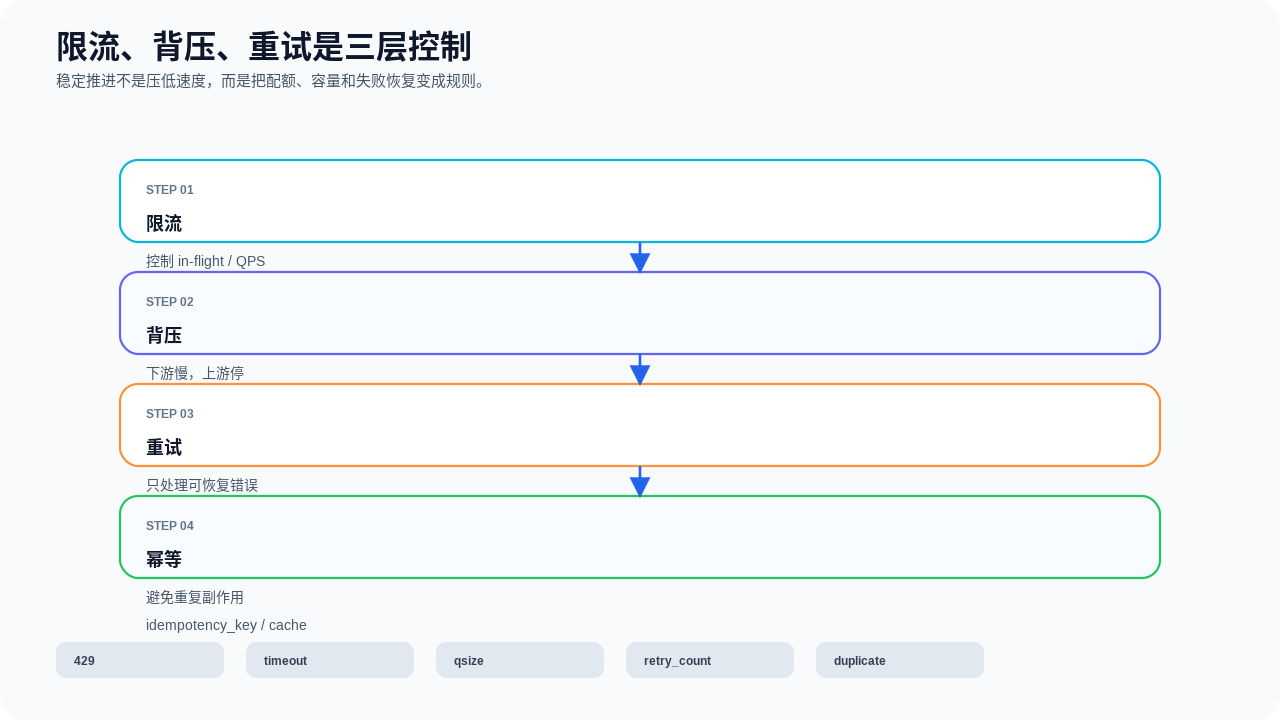
这张图把限流、背压、重试分成三层控制:入口承认配额,中间承认容量,失败路径承认可恢复边界。
这篇解决什么问题
并发控制不是让程序保守,而是把下游配额、队列容量和失败恢复变成明确规则。没有这些规则,任务越多,错误越集中,重试越容易变成新的流量。
工具分层
Semaphore限制同时在途,Pacer或令牌桶限制请求开始速率;有界Queue限制排队量,timeout约束等待。重试还需错误分类、退避、次数与总截止时间,服务端幂等合同决定副作用能否安全重放。
排查链路
先看 in-flight 和 qps,再看 429、timeout、retry_count、qsize。指标同时上涨时,先降并发或拉长退避,不要继续加 worker。
同时在途与请求速率
同时最多8个请求、每个请求50毫秒,理想情况下可产生约160次/秒,远高于每分钟60次的配额。Semaphore无法独自实现每分钟配额。下方Pacer用单调时钟把请求开始时间按间隔排开,再用Semaphore限制在途;它适用于单进程、单事件循环的教学场景。
每次重试重新经过Pacer,等待退避时释放Semaphore。示例把超时与模拟临时错误纳入有限重试,但真实服务超时可能已经产生副作用,必须先判断幂等或查状态。429若带Retry-After,应遵循提供方规则;多进程或多机需要共享配额,不能各自按总配额发送。
实战检查清单
- 在途上限、每分钟或每秒速率、队列容量是否分别配置。
- 重试是否重新经过速率门,退避期间是否释放请求槽。
- 429是否遵循提供方Retry-After,超时是否先查询副作用。
- 是否同时限定尝试次数、总截止时间和多实例共享配额。
运行示例
示例保存为examples/ep11/async_rate_limit_retry.py;目录和文件名由本地自行创建。
python
import asyncio

class Retryable(Exception):
    pass

class Pacer:
    def __init__(self, rate):
        if rate <= 0:
            raise ValueError("rate必须大于0")
        self.interval = 1 / rate
        self.next_start = 0.0
        self.lock = asyncio.Lock()

    async def wait(self):
        async with self.lock:
            loop = asyncio.get_running_loop()
            await asyncio.sleep(max(0, self.next_start - loop.time()))
            self.next_start = loop.time() + self.interval

async def fake_call(item, attempt):
    await asyncio.sleep(0.01)
    if item % 3 == 0 and attempt == 1:
        raise Retryable("模拟临时错误")
    return {"id": item, "status": "done", "attempt": attempt}

async def call_with_retry(item, sem, pacer, attempts=3):
    if attempts < 1:
        raise ValueError("attempts必须大于0")
    for attempt in range(1, attempts + 1):
        try:
            async with sem:
                await pacer.wait()
                async with asyncio.timeout(1):
                    return await fake_call(item, attempt)
        except (Retryable, TimeoutError) as exc:
            if attempt == attempts:
                return {"id": item, "status": "failed",
                        "error": type(exc).__name__, "attempt": attempt}
            await asyncio.sleep(0.02 * 2 ** (attempt - 1))

async def main():
    sem, pacer = asyncio.Semaphore(2), Pacer(rate=50)
    results = await asyncio.gather(
        *(call_with_retry(i, sem, pacer) for i in range(6)))
    print(results)

if __name__ == "__main__":
    asyncio.run(main())