
条件判断:把业务规则写清楚
示例文件:
customer_tags.py
示例核验:2026-10-20(Python 3.14,语法下限为 3.10)
这篇解决什么问题
销售主管口头说“超过 7 天没联系就提醒”,脚本必须把这句话变成稳定规则。
本集产物是:客户标签规则。
核心判断
一个客户可以同时“资料待补”和“需要回访”,所以这两条规则用独立的 if。联系状态则只能二选一:超过 7 天为需要回访,否则联系正常,用 if/else。elif 适合互斥分档,例如金额高、中、低三档;把所有标签改成一串 elif 会漏掉后面的命中项。
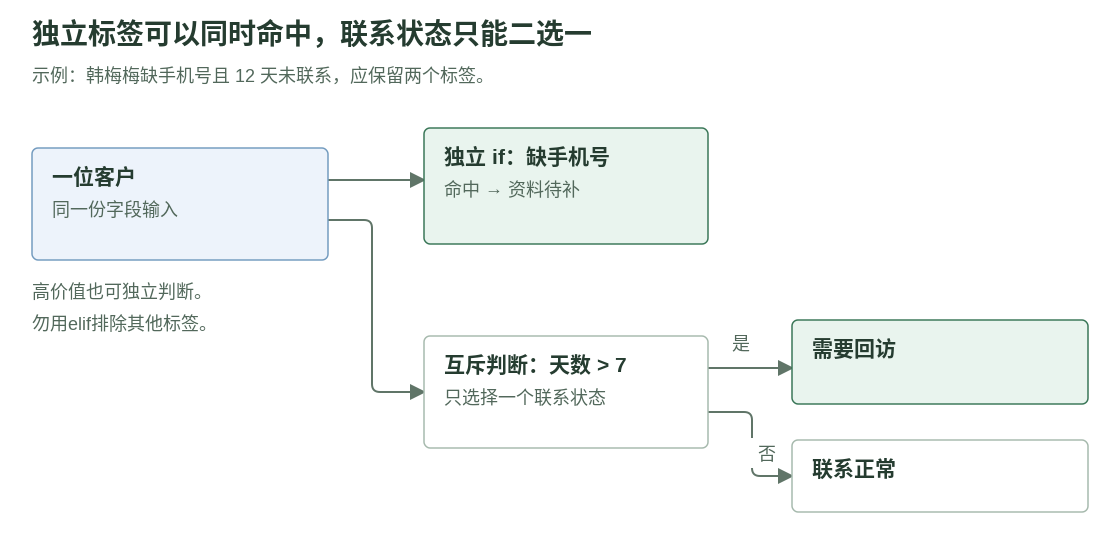
“超过 7 天”对应 > 7,第 7 天不提醒,第 8 天提醒。VIP or amount >= 3000 表示满足任一条件;如果主管要求“VIP 且累计金额达标”,应改成 and,并补上边界样例。
运行示例
bash
python3 customer_tags.py预期李雷为“高价值、联系正常”,韩梅梅为“资料待补、需要回访”,王芳为“高价值、需要回访”。再把联系天数分别改为 7 和 8,确认提醒只在 8 命中。代码假设字段已存在且天数为非负整数;缺字段和文本金额应在进入规则前检查。
完整示例
customer_tags.py
python
from __future__ import annotations

customers = [
    {"name": "李雷", "phone": "13800000001", "level": "VIP", "days_since_contact": 3, "amount": 3200},
    {"name": "韩梅梅", "phone": "", "level": "普通", "days_since_contact": 12, "amount": 500},
    {"name": "王芳", "phone": "13900000003", "level": "VIP", "days_since_contact": 18, "amount": 1800},
]


def tag_customer(customer: dict) -> list[str]:
    tags = []

    if not customer["phone"]:
        tags.append("资料待补")

    if customer["level"] == "VIP" or customer["amount"] >= 3000:
        tags.append("高价值")

    if customer["days_since_contact"] > 7:
        tags.append("需要回访")
    else:
        tags.append("联系正常")

    return tags


def main() -> None:
    for customer in customers:
        print(f"{customer['name']}:{', '.join(tag_customer(customer))}")


if __name__ == "__main__":
    main()